Tag: Multilingualism

BÉLA KOCÁN, Studies in historical toponomasticof the Ugocsa County. 2017.

The author studies the Old and Middle Hungarian toponymic corpus of Ugocsa, the northeastern county in historical Hungary. The corpus on which the work is based consists of nearly 2,000 data. The primary goal of the research is to prove that the linguistic features of the toponyms of the county refer to the presence of…

ESZTER DITRÓI, Model-based examination of toponymic systems: a comparative analysis of of toponym patterns with a statistical approach. 2017.

Territorial differences in the structure of microtoponyms have hardly been studied in toponomastics, therefore the author of this study seeks an answer to the question of whether there exist boundaries marking off different phenomena, or onomastic dialects in toponymic systems. The author analyses toponyms from functional-semantic and lexical-morphological perspectives. She also applies a system based…

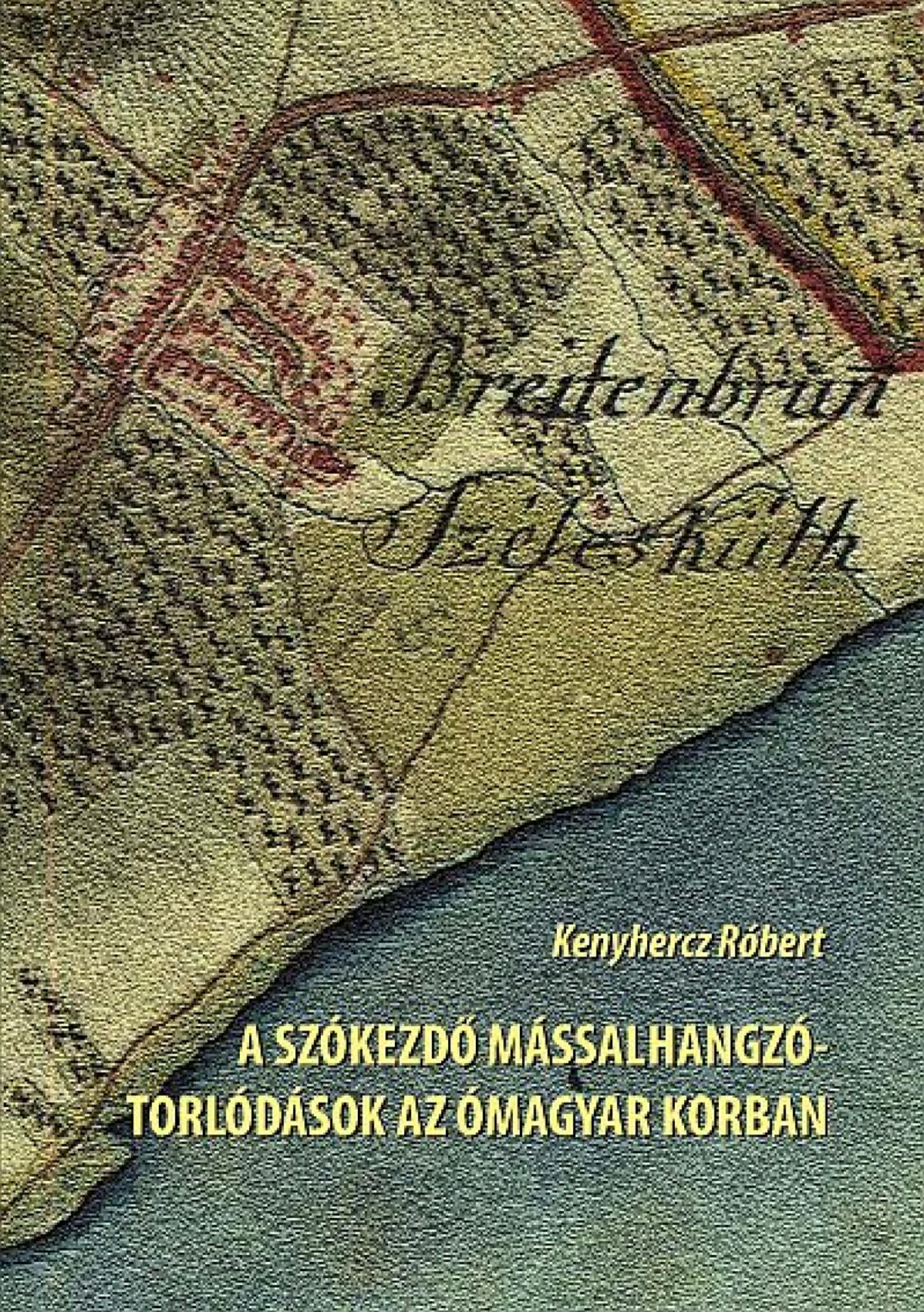
RÓBERT KENYHERCZ, Initial consonant clusters in the Old Hungarian Period. Sound-historical source value of place names. 2013.

It is a generally accepted view in studies dealing with Hungarian sound history literature that the old Hungarian language did not favour initial consonant clusters, a feature inherited from Finno-Ugric. Much has been written about the disappearance of such initial clusters in loanwords. However, the toponymic corpus researched by the author clearly shows that the…

JOSEF SCHWING, German place names in the dialects of southern Transdanubia. 2011.

In the introduction to the study 3 detailed maps demonstrate accurate cartographical data on the German population and the area covered by its dialects in the area. In the introduction the reader will also find information about the structure and historical development of Hungarian place names. The author goes on to expound the fundamental differences…

RITA PÓCZOS, Languagec contact and the interactions of toponymic systems. 2010.

The volume presents the results of onomatosystematic observations of the connection between a present-day multilingual onomastic corpus and their “users”. At the same time, new aspects are raised for conclusions that can be drawn from onomastic corpora of previous periods. The corpus mentioned above is a collection system of of present-day toponyms, included in Baranya…