Author: icos2017

BÉLA KOCÁN, Studies in historical toponomasticof the Ugocsa County. 2017.

The author studies the Old and Middle Hungarian toponymic corpus of Ugocsa, the northeastern county in historical Hungary. The corpus on which the work is based consists of nearly 2,000 data. The primary goal of the research is to prove that the linguistic features of the toponyms of the county refer to the presence of…

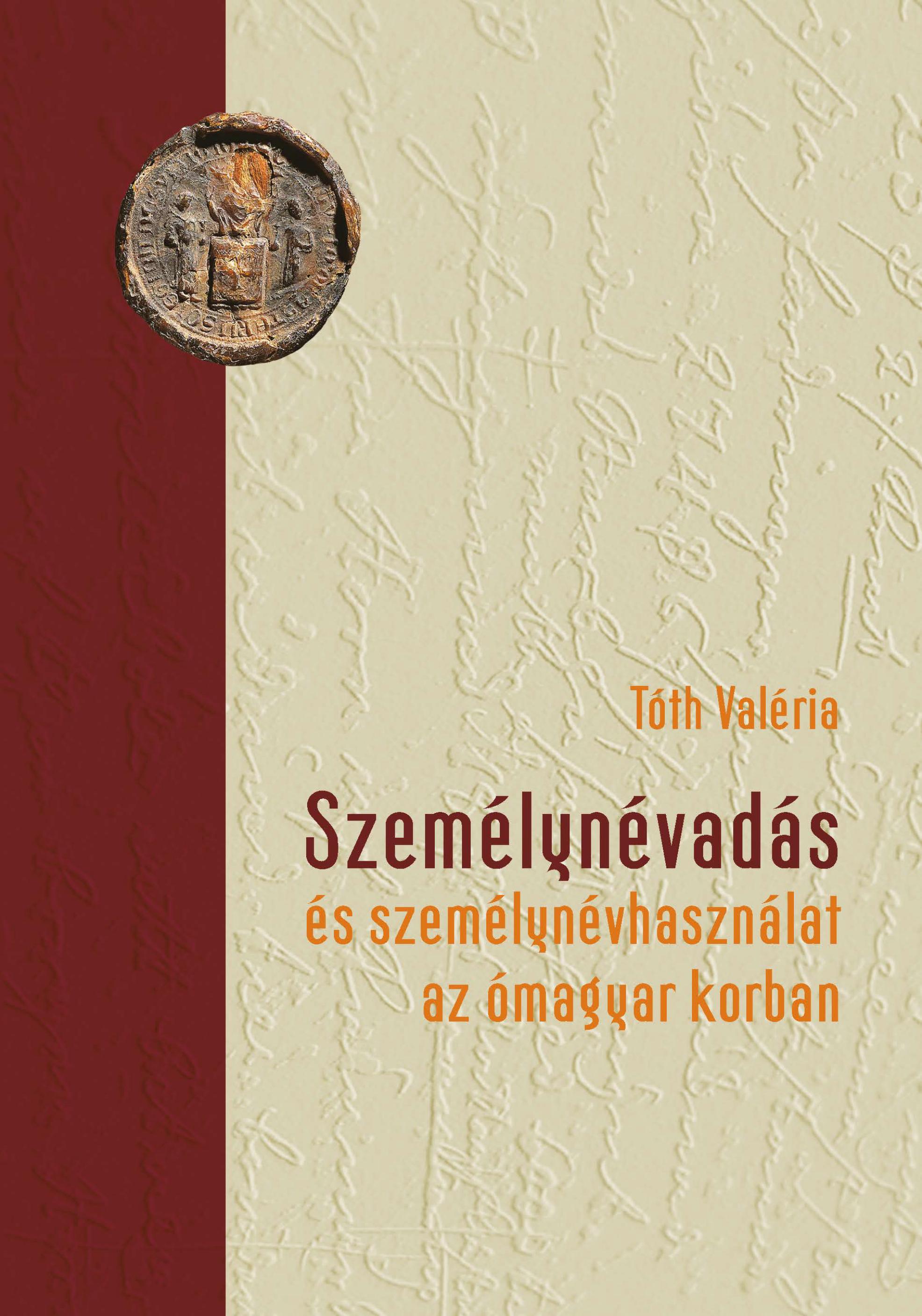
VALÉRIA TÓTH, Toponyms based on anthroponyms in the Old Hungarian Era. 2017.

In the present volume, which is the direct continuation of her monograph on the history of anhroponyms (Valéria Tóth, Debrecen, 2016) the author gives an overall view of how the systemic correlations of personal names spread onto toponyms, and deals with the types of toponyms that contain anthroponymic lexemes. Thus the two volumes constitute an…

ESZTER DITRÓI, Model-based examination of toponymic systems: a comparative analysis of of toponym patterns with a statistical approach. 2017.

Territorial differences in the structure of microtoponyms have hardly been studied in toponomastics, therefore the author of this study seeks an answer to the question of whether there exist boundaries marking off different phenomena, or onomastic dialects in toponymic systems. The author analyses toponyms from functional-semantic and lexical-morphological perspectives. She also applies a system based…

BARBARA BÁBA, Geographical common words in space and time. 2016.

Geographical common words, as expressions marking places, are of central importance to the lexicon of any language, which is also true of Hungarian, because it is only these elements that can identify a certain type of locations. The research of geographical common words is especially significant in Hungarian, because they belong to that group of…

VALÉRIA TÓTH, Personal name-giving and personal name usage in the Old Hungarian Era. 2016.

Name theory holds that the two most ancient proper names are anthroponyms and toponyms. Therefore most information about the system of proper names (its function and history) itself can be acquired if the characteristics of these two types of proper names are revealed. They provide not only a wide range of data about the language…

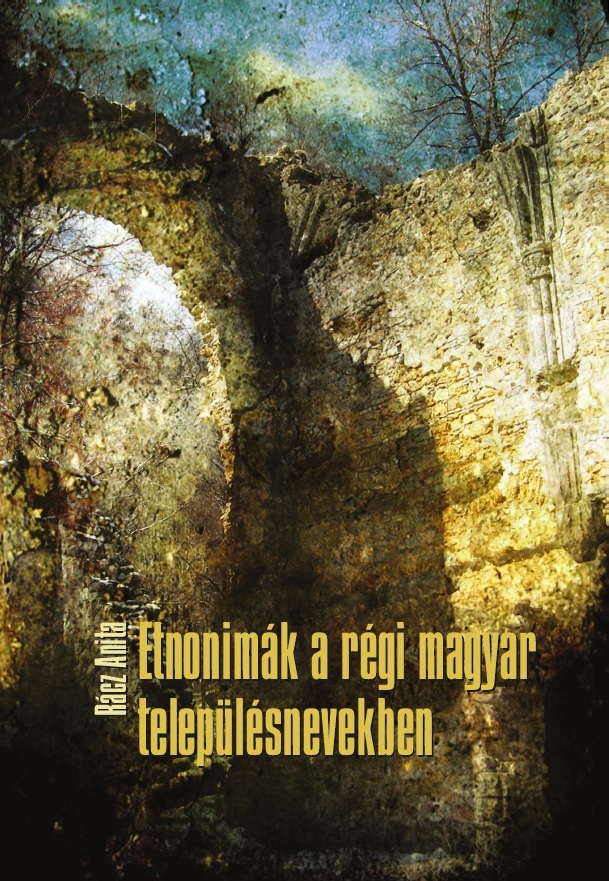
ANITA RÁCZ, Ethnonyms in old Hungarian settlement names. 2016.

The antecedent of the book is a work by the same author entitled: Adatok a népnévvel alakult régi településneveink történetéhez [Supplement to the history of Hungarian settlement names formed from ethnonyms] (Debrecen, 2011). In it, the toponymic corpus is analysed from various perspectives. The result of the examination is the treatment of the onomastic corpus…

Toponyms of Hajdú-Bihar County, Vol 1. Toponyms of the Hajdúböszörmény and Hajdúhadház Districts. Ed. BARBARA BÁBA. 2015.

Toponyms of the Carpathian basis have been collected by Hungarian toponymists and made available both to researchers and the general public since the beginning of the 19 th century. Research into and publication of the toponyms of Hajdú-Bihar and Szabolcs-Szatmár-Bereg Counties have been undertaken by linguists working at the University of Debrecen and the College…

ÉVA KOVÁCS, The Census of the Abbey of Tihany as a source for historical toponomastics. 2015.

After thoroughly studying the 1211 land survey of the Abbey of Tihany, the author decided to continue her work along the general lines of Hungarian historical linguistic research and disclose even more exact information about the Hungarian language and its users of the decades following the Hungarian conquest of the Carpathian Basin. This linguistic record…

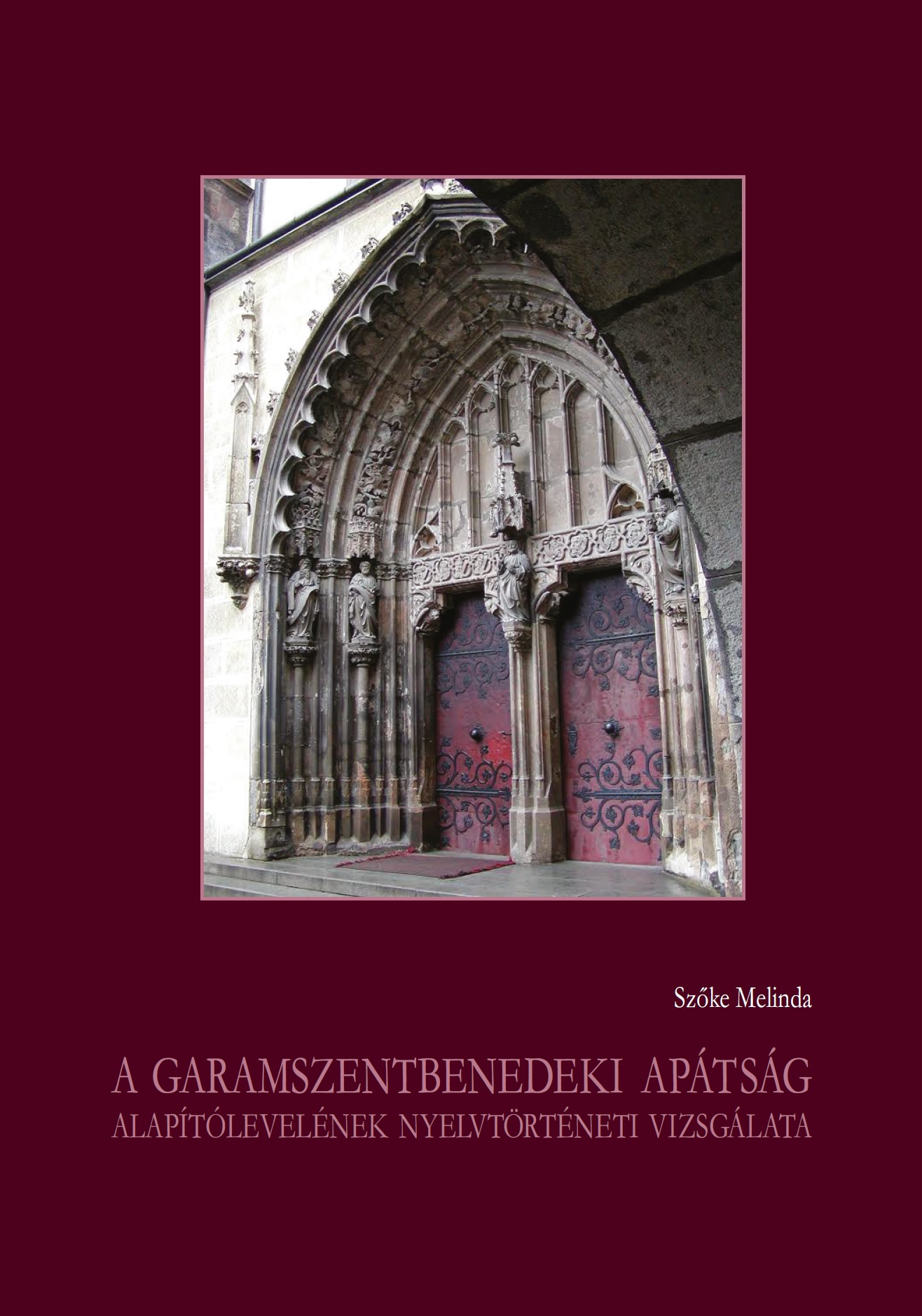
MELINDA SZŐKE, Historical linguistic analysis of the founding charter of the Abbey of Garamszentbenedek. 2015.

The charters containing anthroponyms and toponyms in Hungarian are the most important sources of the early history of the Hungarian language. So far, special attention has been paid to genuine charters only. Considering, however, the availability of sources from the early period of Hungarian literacy, other source types (copies or even fakes) should also be…

BARBARA BÁBA–MAGDOLNA NEMES, Hungarian geographical common words. 2014.

Geographical appellatives (common words) as phrases denoting places constitute one of the fundamental sets of the Hungarian vocabulary and name system (or of the vocabularies and name systems of any other language), since no other elements are suitable for referring to classes of (geographical) objects and places. Understandably, the analysis of geographical common words has…